Guide
Back pain from sitting all day
If your back gets tight from a chair and a screen, the fix is less about perfect posture and more about moving often and building a back that handles long days.
Key takeaways
- There is no single perfect sitting posture. Staying in any one position for hours is the bigger issue.
- Change position every 30 to 60 minutes, and add a short routine a few times a week.
- Hip flexor, upper back, and glute work target the areas long sitting affects most.
Why does sitting all day make my back hurt?
Desk stiffness is one of the most common reasons people look for help with their back. For most people, the problem is not that sitting damages the spine. Most back pain has no specific structural cause 1. It is that the back stays in one position for hours. Hip flexors stay shortened, the upper back rounds toward the screen, and the glutes barely work.
Is there a perfect posture?
No. Sitting up straight is fine, and so is leaning back, as long as you don’t stay frozen in any of them. A good chair and screen height make long days more comfortable, but they don’t replace moving. The best posture is the next one.
What actually helps
- Move often. Get up every 30 to 60 minutes: refill water, take a call standing, walk to a colleague.
- Stay active overall. Guidelines recommend staying active and exercising for low back pain 23.
- Build the muscles sitting switches off. Glutes, upper back, and the muscles that keep your trunk steady.
A short routine for between meetings
- Chair thoracic extension: 8 reps over the back of your chair.
- Hip flexor stretch: about 30 seconds per side.
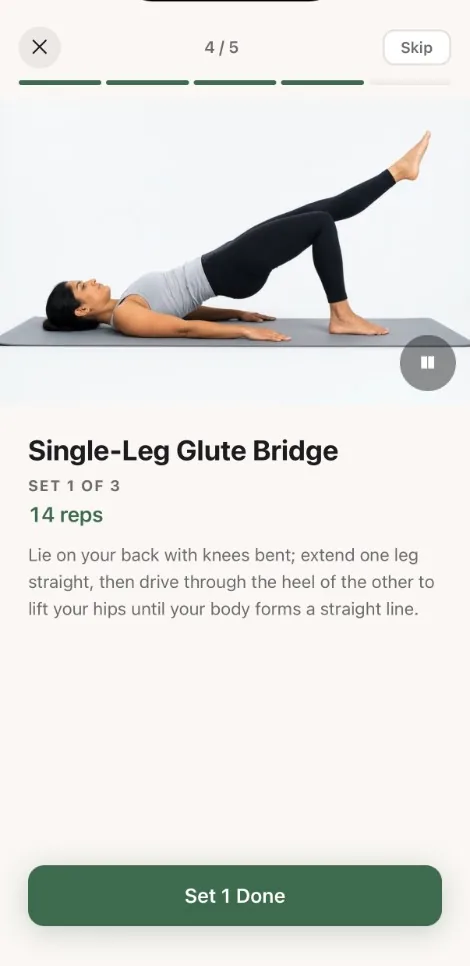
- Glute bridge: 12 reps on the floor if you have space.
- Open-book rotation: 8 per side.
If you have a resistance band at your desk, a set of resistance band row reps is a good addition for the upper back. Upper back pain exercises covers that side in more detail.
Sitting and the next morning
Long days in a chair often show up the next morning too. Why your lower back is stiff in the morning covers that side. If you want to start on your own, a no-equipment back routine fits next to a desk, and how long to stick with it sets realistic expectations.
How Remedy fits
Remedy’s onboarding asks about your activity level, including “mostly sitting day-to-day,” and whether sitting too long makes your back worse. Choosing those shifts your program toward exercises aimed at sitting, like the hip flexor stretch, chair thoracic extension, rows, and the McKenzie press-up. Sessions are short on purpose so they fit around work. This page is general fitness information, not a diagnosis. If sitting pain is sudden, severe, or comes with warning signs, see a clinician first.
Exercises in this guide
Hip flexor stretch
A lunge-position stretch for the front of the hip.
MobilityChair thoracic extension
A gentle backward bend of the upper back over the top of a chair.
MobilityOpen-book rotation
A side-lying rotation for the upper and middle back.
Glutes and hipsGlute bridge
Lying on your back with knees bent, you drive through your heels to lift your hips.
StrengthResistance band row
Pulling a resistance band toward your lower ribs and squeezing your shoulder blades together.
MobilityMcKenzie press-up
A press-up from lying on your stomach where the hips stay on the floor and the lower back extends.
Questions
Why does my back hurt after sitting all day?
Usually because it has stayed in one position for hours, not because sitting is damaging it. Moving more often and building strength in the hips and back tend to help.
What is the best sitting posture for back pain?
There isn’t one perfect posture. The best posture is the next one: change position regularly, stand up, and move.
Do standing desks help back pain?
They can help by making it easier to change position, but standing all day is not the goal either. Alternating between sitting, standing, and moving is what matters.
Sources
- Hartvigsen J, et al. What low back pain is and why we need to pay attention. The Lancet. 2018;391(10137):2356-2367.
- Low back pain and sciatica in over 16s: assessment and management (NG59). National Institute for Health and Care Excellence, 2016, updated 2020.
- Back pain (NHS Health A to Z). NHS, 2026.
This guide is general fitness information, not medical advice. How we write our guides.